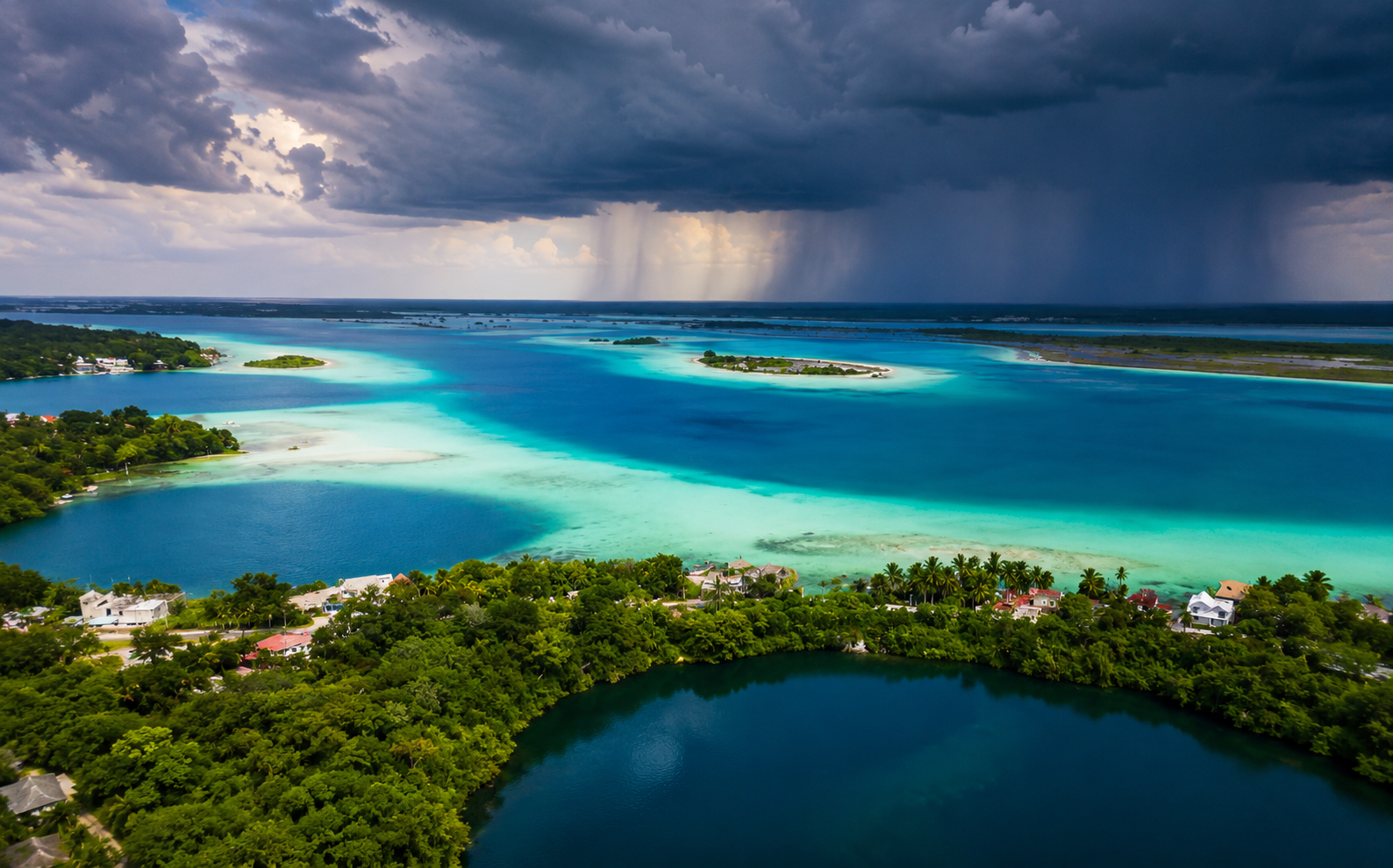
Discover the best time to visit Bacalar based on weather, rainfall, crowds, prices, lagoon activities, and hurricane season.
Weather, Crowds and Travel Tips
The best time to visit Bacalar is generally from November through April, when the weather is drier, humidity is lower, and sunny skies make the Lagoon of Seven Colors look especially vibrant.
However, Bacalar can be visited throughout the year. The right time depends on whether you prefer the best weather, lower prices, or fewer crowds.
This simple guide explains what to expect during each season.
Best Overall Time: November Through April
November through April is Bacalar’s dry season and the most popular time to visit.
During these months, travelers can generally expect:
- More sunny days
- Lower humidity
- Comfortable temperatures
- Better conditions for boat tours
- Calmer mornings for kayaking and paddleboarding
- Less frequent rainfall
January through March usually offers some of the most comfortable weather. However, this period can also bring higher hotel prices and more visitors.
Book lagoonfront hotels and private boat tours early if you plan to visit during the winter season.
Best Time for Good Weather and Fewer Crowds
Late November, early December, and April can offer a good balance between weather and crowds.
These periods may provide:
- Mostly favorable weather
- Fewer visitors than the Christmas and winter peak
- Better hotel availability
- More choices for tours and restaurants
April is often sunny but can become very hot, particularly toward the end of the month.
Avoid Semana Santa, or Holy Week, if you want a quieter experience. This is a popular domestic travel period in Mexico, and hotels and attractions can become busy.
Visiting During the Hot Season
April and May are among Bacalar’s hottest months. Afternoon temperatures can feel intense, especially when combined with humidity.
If you visit during this period:
- Plan lagoon activities in the morning.
- Rest during the hottest part of the afternoon.
- Carry plenty of drinking water.
- Wear lightweight, UV-protective clothing.
- Choose accommodations with air conditioning.
- Bring a hat and sunglasses.
The weather is still suitable for swimming and boat tours, but midday sightseeing may be uncomfortable.
Visiting During the Rainy Season
Bacalar’s rainier season generally runs from May or June through October.
This does not mean it rains continuously. Many days include a mixture of sunshine, clouds, and short tropical showers. However, longer periods of rain are possible.
Advantages of visiting during the rainy season include:
- Lower accommodation prices
- Fewer tourists
- Greener scenery
- Better hotel availability
- A quieter atmosphere
Possible disadvantages include:
- Higher humidity
- More mosquitoes
- Muddy roads in undeveloped areas
- Weather-related tour cancellations
- Cloudy conditions that can temporarily soften the lagoon’s colors
Schedule important lagoon activities near the beginning of your stay. If bad weather causes a cancellation, you may have time to reschedule.
Hurricane Season
Mexico’s Caribbean hurricane season generally runs from June through November, with the greatest storm activity often occurring later in the summer and early fall.
Most visitors will not experience a hurricane, but tropical systems can cause:
- Heavy rain
- Strong wind
- Flooding
- Power interruptions
- Road closures
- Canceled tours
- Flight and train disruptions
If you travel during hurricane season:
- Monitor the weather forecast.
- Consider travel insurance.
- Choose flexible reservations.
- Follow instructions from local authorities.
- Keep important documents protected.
- Avoid scheduling tight transportation connections.
September and October are generally the months when travelers should allow the most weather flexibility.
When Is Bacalar Most Crowded?
Bacalar is busiest during:
- Christmas and New Year
- January through March
- Semana Santa
- Easter
- Mexican holiday weekends
- July and August
During these periods, popular hotels, restaurants, and lagoon tours can sell out.
Reserve accommodations and major activities in advance. Visit Los Rápidos and other popular attractions early in the day to avoid the largest crowds.
When Is Bacalar Most Affordable?
Travelers can often find better hotel rates during:
- May
- June
- September
- October
- Early November
These months fall outside the main dry-season peak, but the tradeoff is hotter weather and a greater chance of rain.
For good value with improving weather, November can be an excellent choice.
Does Sargassum Affect Bacalar?
Bacalar Lagoon is inland and is not a Caribbean beach, so it is generally not affected by the large sargassum arrivals experienced along the coast in Cancún, Playa del Carmen, Tulum, and Mahahual.
This makes Bacalar a popular alternative when Caribbean beaches are experiencing heavy seaweed conditions.
Heavy rain and runoff can still affect lagoon conditions, so visitors should always follow local environmental advisories.
What to Pack for Each Season
November through April
Bring:
- Light clothing
- Swimsuit
- Hat and sunglasses
- Light sweater for cooler evenings
- Rash guard
- Quick-drying towel
May through October
Add:
- Rain jacket or poncho
- Waterproof bag
- Lightweight long sleeves
- Mosquito protection for use away from the water
- Extra quick-drying clothing
- Flexible footwear
Avoid entering the lagoon while wearing sunscreen, insect repellent, body oils, or lotions. Use UV-protective clothing when swimming.
How Many Days Should You Spend in Bacalar?
Three full days is ideal for most visitors.
This allows time for:
- A lagoon boat tour
- Kayaking or paddleboarding
- Los Rápidos
- Cenote Azul
- Fort San Felipe
- A relaxing afternoon beside the lagoon
Stay four nights if you are visiting during the rainy season. The extra time provides flexibility if weather affects your plans.
Final Thoughts
For the best combination of dry weather and comfortable temperatures, visit Bacalar between November and April.
Choose late November, early December, or April if you want favorable weather with fewer peak-season crowds. Visit during summer or early fall for lower prices, but prepare for heat, humidity, rain, and possible storm-related disruptions.
No matter when you visit, schedule lagoon activities early in the morning, avoid planning them for Wednesday, and leave some flexibility in your itinerary.