
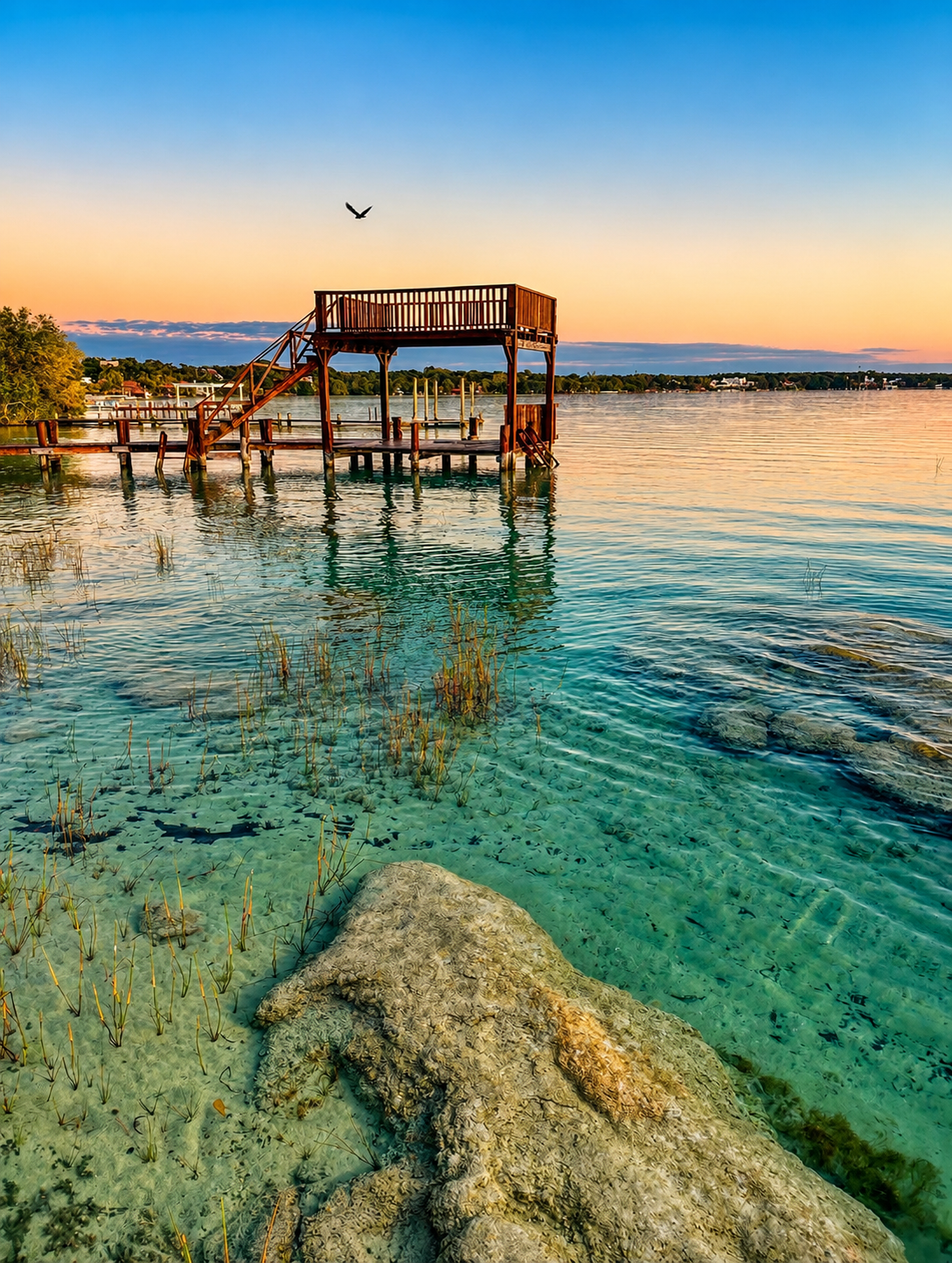
Bacalar Lagoon is a freshwater lagoon in southern Quintana Roo, Mexico, famous for clear water that shifts from pale turquoise to deep blue. Travelers visit the Lagoon of Seven Colors to sail, swim, kayak, explore cenotes, and slow down beside the water. It is especially appealing to couples, nature lovers, families who enjoy water activities, and travelers looking for a quieter alternative to Mexico’s busy Caribbean beach destinations.
For a first visit, plan at least two nights, book one lagoon tour, and leave time for swimming from an authorized waterfront access point. Three nights gives you more breathing room; four or five lets you add Los Rápidos, a cenote visit, and unhurried mornings on a dock.
The lagoon is also a sensitive living ecosystem. Its stromatolites, mangroves, and protected shoreline deserve as much attention as its colors. This guide explains what to see, how to choose your experience, and how to enjoy Bacalar responsibly.
What Is Bacalar Lagoon?
Bacalar Lagoon, or Laguna de Bacalar, lies beside the town of Bacalar in southern Mexico’s Yucatán Peninsula, near Chetumal and the Belize border. It is inland from the Caribbean coast, so the water you swim in is freshwater rather than seawater.
The lagoon stretches roughly 50 kilometers from north to south, although published measurements vary depending on the boundaries used. It is a long, narrow landscape of open water, smaller waterways, and distinct shoreline environments. Most visitors explore a portion of it rather than its entire length.
Bacalar town sits along its western shore. Many visitor services, tour departures, waterfront restaurants, and accommodations cluster around town, while other properties extend north and south along the lagoon.
Its best-known nickname is the Lagoon of Seven Colors, also translated as the Lake of Seven Colors. Both names refer to the same destination. Pale shallows, turquoise open water, and dark cenote depressions create a changing patchwork of blues.
Groundwater moves through the region’s porous limestone and contributes to the lagoon’s water supply. Cenotes are part of that landscape: some appear as deep areas within the lagoon, while Cenote Azul is a separate open-water sinkhole nearby.
For travelers, the most useful distinction is between seeing the lagoon and accessing it. A waterfront road, hotel view, or restaurant reservation does not automatically provide permission to swim. Choose an authorized dock, balneario, beach club, hotel access point, or guided excursion.
If you are still planning your arrival, start with our guide to getting to Bacalar.
Why Is Bacalar Lagoon Seven Colors?
Bacalar Lagoon’s different colors come mainly from changing water depth, its light-colored limestone and carbonate sediment bottom, and sunlight. Shallow water looks pale turquoise, while deeper areas—especially cenotes—appear darker blue. Wind, clouds, and water clarity change the effect, so “seven colors” describes a range of shades rather than seven fixed bands.
The pale bottom helps make the shallows luminous. Where the bottom drops away, the water looks deeper and darker. Cenote edges can make that transition particularly striking: bright blue water may suddenly meet an almost navy-colored patch.
Light matters, too. Sunrise is beautiful for atmosphere, but stronger daylight often makes the turquoise colors easier to see. A cloudy afternoon can look very different from a sunny morning at the same dock.
This is why a boat tour can reveal more variety than a photograph taken from shore. As you move across the lagoon, viewing angle, depth, and background change together.
Rainfall, runoff, suspended material, and ecosystem conditions can affect visibility and coloration. Give yourself time to experience the lagoon under different light conditions rather than expecting every view to match the same travel photograph.
Best Things to Do on Bacalar Lagoon
You do not need to book every activity to enjoy Bacalar. A good first trip combines one guided outing with time at an accessible swimming area. Add paddling or Los Rápidos according to your interests.
Sail Across the Lagoon
Choose sailing if you want the journey to be part of the experience. When the wind cooperates, sailing offers quiet stretches where you can appreciate the water without constant engine noise.
Look at the boat layout before booking. Shade, seating, ladders, and the amount of space available can matter more than an appealing photograph. A small sailing boat may suit an active couple better than someone who needs easy boarding.
A daytime sail is usually the better choice for comparing water colors; an evening outing emphasizes atmosphere. Explore the options in our Bacalar boat tours guide and sunset cruise guide.
Take a Guided Boat Tour
A boat tour is a practical introduction to the lagoon’s geography. Depending on the route and conditions, you may see cenote areas, the Pirates Channel, and authorized swimming stops.
Ask what the tour actually includes. “Visit a cenote” might mean viewing it from the boat rather than swimming there. A longer list of landmarks also does not necessarily mean more time in the water.
For a short stay, prioritize a manageable group size, a clear itinerary, and a guide who explains conservation practices. Compare formats in our guide to Bacalar boat tours.
Go Kayaking
Kayaking gives you more control over your pace and a close view of the shoreline. A guided outing is a sensible introduction if you are unfamiliar with the lagoon, especially when you want to paddle beyond your hotel’s immediate waterfront.
Choose your route based on wind and ability. Open-water crossings can be tiring, and wind can make the return harder than the outward journey.
Wear a life jacket, carry drinking water, and follow the rental provider’s boundaries. Our kayaking in Bacalar guide explains how to plan a manageable outing.
Try Sunrise Stand-Up Paddleboarding
A sunrise SUP outing combines exercise with soft light and a quieter start to the day. Beginners can start kneeling and stand only when comfortable; a good guide should help you find a stable position before traveling farther.
Early departures do not guarantee calm water. Check conditions, the guide’s cancellation policy, and whether equipment includes a properly fitted life jacket.
If getting onto a board from the water sounds difficult, ask about assistance before booking. Read our paddleboarding in Bacalar guide for a closer look at this experience.
Spend a Few Hours Swimming
A swimming afternoon is often the easiest way to enjoy the lagoon. Pick a location with the facilities you need: shade, toilets, a ladder, food, or somewhere secure for your belongings.
Public access can keep costs down, while a beach club may make a longer visit more comfortable. Families should check water-entry arrangements and available flotation equipment before choosing a location.
For more ways to combine swimming with a day in town, see our best things to do in Bacalar.
See the Pirates Channel
The Pirates Channel is a popular lagoon landmark, known for bright shallow water and its association with Bacalar’s maritime history. A guided tour is generally the easiest way to see the area without navigating there independently.
Your guide should explain where boats can approach and where entering the water is permitted that day. Access and swimming opportunities depend on current conditions and restrictions.
See how this stop fits into a wider route in our Bacalar boat tours guide.
Explore Bacalar’s Cenotes
Bacalar’s cenotes add depth and contrast to a lagoon visit. Cenote Negro, Esmeralda, and Cocalitos are associated with the lagoon, while Cenote Azul offers a separate experience from shore.
Some cenotes are best appreciated from the boat, particularly when depth or conservation restrictions limit swimming access. A guided visit can help you understand how they fit into the lagoon’s geography.
Our Bacalar cenote guide explains the differences in more detail.
Visit Los Rápidos
Los Rápidos is a narrow waterway south of town where moving water creates a different experience from the broad lagoon. Visitors come for the channel, waterfront facilities, and opportunities to enter designated areas when conditions permit.
The current is the attraction, but it also deserves respect. Ask staff where to enter, how to exit, and whether the activity suits your swimming ability. Arrange your return transportation before leaving town.
Allow several hours rather than squeezing it between unrelated bookings. Our two-day Bacalar itinerary shows one way to give Los Rápidos its own part of the trip.
Best Places to Swim in Bacalar Lagoon
The best swimming spot depends on whether you want convenience, facilities, quiet surroundings, or an outing beyond town. These are useful starting points, subject to current access and posted restrictions.
Balneario Municipal El Aserradero
El Aserradero is a central waterfront access option to consider if you want to swim without traveling far from town. Confirm the current entrance arrangements and identify the designated swimming area before entering.
Check the ladder, depth, and boat activity. Public access does not necessarily include lifeguards or lockers. Bring only what you can keep secure and leave valuables at your accommodation where possible.
Bertilla Lagoon & Beach Club
Bertilla is worth considering when you want lagoon access combined with a meal and a place to settle in. Confirm the current day-pass or minimum-spend policy, what it includes, and whether swimming is available during your visit.
For families, the useful questions are practical: Is there shade near the water? Is entry by steps or ladder? Can children get out easily? Does the venue provide suitable life jackets?
Your Lagoonfront Hotel
A hotel with authorized swimming access can be the most convenient option, particularly if you prefer short swims throughout the day. You can return to your room, avoid transporting belongings, and enjoy the waterfront before or after excursions.
Inspect the setup before booking. “Lagoonfront” can describe the location without guaranteeing shallow entry, accessibility, or unrestricted swimming. Ask for a recent photograph of the dock and entry point.
Authorized Swimming Stops on a Tour
A guided stop can let you enjoy water away from a busy dock. It also provides a clear place to return to, provided the guide explains the boundaries and reboarding arrangements.
Wear a life jacket if the depth is uncertain or you are not confident swimming. Clear water can make distances and depths deceptive.
Cocalitos
Cocalitos is associated with attractive shallow water and stromatolites. Before visiting, confirm current land access, facilities, and permitted swimming areas. Older photographs of swings, hammocks, or beach-club amenities may not reflect the current setup.
Seeing Cocalitos on a boat route does not necessarily mean you can enter from shore. Ask what is open and keep well away from protected formations.
For a swimming-focused day, prioritize an easy exit, shade, and clear rules. A waterfront restaurant reservation is not automatically a swimming pass.
Bacalar Cenotes
A cenote is a natural opening or depression in limestone associated with groundwater. In Bacalar, some cenotes are submerged within the lagoon, so you may recognize them through changes in water color rather than a separate entrance.
Cenote Negro
Also called Cenote de la Bruja, Cenote Negro is known for a dark-water area contrasting with the lagoon’s brighter shallows. It is a useful reminder that Bacalar is not uniformly shallow.
Enjoy the view from the boat and follow the guide’s directions about any permitted swim. Avoid jumping into unfamiliar water or assuming that the depth matches nearby shallows.
Cenote Esmeralda
Cenote Esmeralda is another lagoon cenote commonly discussed on sightseeing routes. It offers a different view of the lagoon’s underwater landscape and groundwater connections.
Ask whether your itinerary includes a close view, a passing explanation, or an authorized water stop. Those are different experiences, even when the booking description uses the same landmark name.
Cenote Cocalitos
Cocalitos combines a cenote setting with an area known for stromatolites. It is particularly valuable for understanding why Bacalar needs careful visitor behavior.
Your guide should identify sensitive areas and explain the appropriate viewing distance. Photograph the formations without touching them or stepping onto them.
Cenote Azul
Cenote Azul is separate from the main lagoon and is typically visited from land. Its open-water setting makes it a different outing from seeing submerged cenotes on a cruise.
Plan it as a deep-water visit, with current entrance conditions and swimming guidance checked before arrival. Families with young children and less confident swimmers should consider the water-entry setup and available flotation equipment.
To choose between these locations, read our complete guide to Bacalar’s cenotes.
Pirates Channel: What to Expect
The Pirates Channel, or Canal de los Piratas, lies across the lagoon from town and forms part of the surrounding waterway network. Visitors are drawn to its pale blue water, scenery, and historical associations.
Bacalar’s pirate history is more than a tourism theme. Fort San Felipe was built in the eighteenth century to help defend the settlement from attacks. Visiting its museum gives context to the trade, conflict, and waterways that shaped the region.
A lagoon tour provides a convenient way to see the channel area. Confirm that the stop is on the actual itinerary, since weather, traffic, and access restrictions can change routes.
Do not assume a shallow-looking section is suitable for everyone. Boats, uneven footing, and local water movement may affect swimming. Stay within the guide’s designated area and away from restricted channel passages.
Avoid rubbing lagoon sediment onto your skin. Leave the bottom and surrounding habitat undisturbed during your visit.
Stromatolites: Bacalar’s Living Natural Heritage
Stromatolites are layered mineral structures built through the activity of communities of microorganisms. They may resemble ordinary rocks, but modern formations support living microbial communities. Bacalar’s freshwater system is known for an exceptionally extensive stromatolite reef.
They are scientifically important because formations of this kind help researchers understand ancient microbial life and how biological activity interacts with minerals. The ancient history belongs to this kind of life and its fossil record; individual formations in Bacalar are not billions of years old.
For visitors, the critical point is their living surface. Damage from feet, hands, boat contact, or anchors can affect that surface.
Keep at least three meters away from stromatolites, and follow any larger boundary required by signs or guides.
Do not stand, sit, climb, or touch them, and never drag a kayak over a formation. If you cannot identify a safe place to put your feet or land a craft, remain afloat and ask your guide.
Choosing a conservation-minded operator helps here. Before booking, ask how they handle stromatolite areas. Look for clear explanations of viewing distances, swimming boundaries, and boat positioning.
Bacalar Lagoon Rules and Responsible Visiting
Bacalar has environmental guidance, site-specific access rules, and navigation arrangements that can change. Follow current signs and instructions at your access point, and verify your exact date before planning water activities.
Protect the Shoreline and Respect Restricted Areas
Respect protected-area buoys, avoid damaging mangroves and reeds, leave wildlife in place, and keep waste out of the lagoon. Do not cross a boundary because another swimmer or boat has done so.
Approach and landing restrictions apply to nonmotorized craft, too. Let your operator explain the approved route before you set out.
Carry out everything you bring, including food scraps. Keep the lagoon bottom undisturbed and avoid collecting plants, shells, or animals.
Follow Sunscreen Guidance
Do not use sunscreen when swimming in the lagoon, including products marketed as biodegradable. Plan your sun protection around a long-sleeved swim shirt, suitable covering clothing, a hat when out of the water, and shade.
Ask your venue how to prepare before swimming if you have already applied products. For long days outdoors, organize shade breaks rather than spending the entire afternoon on an exposed dock.
Follow Boating and Paddling Instructions
Use an operator that can explain its authorization, passenger capacity, safety equipment, and route restrictions. Check that everyone has an appropriately sized life jacket and understands the boarding procedure.
Rental paddlers should receive boundaries, return instructions, and a contact method. Follow the route approved for your equipment and experience level.
Check Wednesday Navigation Restrictions
Wednesday access depends on the date and activity. Navigation rest days can include sailboats, kayaks, and paddleboards as well as motorboats. Some dates have exceptions.
Confirm your exact date with your provider and current local guidance before departure. This matters even if you plan to use equipment supplied by your hotel.
Swimming from an authorized access point may remain available on a navigation rest day, subject to local restrictions and venue opening. Check directly with the place you intend to visit.
Bacalar Lagoon Tours: Which Experience Should You Choose?
Choose the format around your group’s needs, then compare the specific boat and itinerary. These are planning ranges rather than guaranteed schedules.
| Experience | Best For | Typical Duration |
|---|---|---|
| Sailboat | Couples and a relaxed outing | 3–4 hours |
| Shared boat | Value and an introduction to the lagoon | 2–3 hours |
| Private boat | Families or groups wanting their own departure | 3–4 hours |
| Guided kayak | Active travelers comfortable paddling | 2–3 hours |
| SUP | Sunrise outings and a shorter active session | 1–2 hours |
A shared boat makes sense when you want an overview without organizing an entire vessel. A private booking can be useful for a family with different swimming preferences, provided the operator allows adjustments to the pace.
For sailing, ask about shade and wind-dependent route changes. For paddling, ask about the route length and what happens if someone becomes tired. A beginner outing should include instruction and suitable support.
Before paying, clarify the departure point, maximum passenger count, life jackets, swimming stops, refreshments, transport, and weather cancellation terms. Compare total costs, including transfers and optional extras.
If seeing the water’s bright colors is your priority, book a daylight trip. If your priority is atmosphere and an evening on the water, choose a sunset outing.
Our Bacalar boat tours guide provides the detailed comparison and helps you choose the right format.
When Is the Best Time to Visit Bacalar Lagoon?
For many travelers, roughly December through April offers an appealing balance of generally drier weather and outdoor sightseeing. It is also a popular travel period, so desirable rooms and small-group tours can require advance booking.
The wetter part of the year generally brings hotter, more humid conditions and a greater chance of rain. Flexible reservations and time to reschedule an excursion become more valuable during this period.
Atlantic hurricane season runs from June through November. Bacalar is inland, yet regional storms can still affect rainfall, transport, and lagoon activities. Check forecasts and official advisories close to your trip.
Wind matters even on a sunny day. It can change a paddle route, make a boat ride less comfortable, or affect an operator’s departure decision. Put your main excursion early in the stay so you have another chance if conditions interfere.
For season-by-season planning, see our best time to visit Bacalar guide.
Where to Stay on Bacalar Lagoon
Accommodation choice shapes how easily you can enjoy the water. Compare location, direct access, and transport together rather than selecting a room only for its view.
Direct Lagoonfront Accommodation
Choose direct lagoonfront accommodation if you want to spend substantial time beside the water. Easy access can make short swims and quiet mornings part of your routine.
Before booking, confirm that guests can swim, how they enter and leave the water, and whether there is shade. Check whether kayaks, breakfast, and parking are included or charged separately. Ask about any age restrictions if traveling with children.
A lagoonfront stay can be particularly appealing if you plan to spend several afternoons at the property. Compare the room premium with what you might otherwise spend on waterfront access and transportation.
Downtown Bacalar
Downtown is practical when restaurants, cafés, and walking convenience matter most. It can also work well for travelers who expect to spend their days on excursions and need a comfortable base.
A room several blocks inland may offer better value, but budget for swimming access and transport when necessary. Check the walking route to your tour departure rather than relying on a general “central” description.
North of Town
Northern properties can suit travelers looking for a quieter waterfront retreat. The tradeoff is distance from central restaurants and meeting points.
Check transport availability and onsite food before committing to a remote stay. Include likely taxi costs when comparing accommodation prices.
South of Town
Southern stays can work for travelers interested in the cenote area, Los Rápidos, or a more secluded base. A property described as “Bacalar” may still be well beyond the walkable town center.
Look closely at the map and clarify which part of the water system the property faces. If you want to combine several attractions, parking or dependable arranged transfers may matter more than proximity to one landmark.
Use our where to stay in Bacalar guide to compare the areas before choosing a specific hotel.
How Many Days Do You Need in Bacalar?
Plan two nights as a practical minimum, three nights for a more comfortable first visit, or four to five nights for a relaxed lagoon-focused stay. Arrival and departure times matter: two nights with a late arrival can leave only one full day.
Two Nights: A Short Introduction
With two nights, prioritize a guided lagoon outing and some easy swimming. Add Los Rápidos only if your travel schedule leaves enough time to enjoy it.
Choose accommodation that makes your main activities convenient. Staying centrally can reduce the time spent arranging transport during a short visit.
Three Nights: A Comfortable First Visit
With three nights, you can spread out a tour, a swim or paddle, and one outing beyond town. You also gain flexibility if wind or rain affects your main excursion.
This is a good option for travelers who want to see the main attractions while leaving room for waterfront meals and relaxed afternoons.
Four to Five Nights: A Relaxed Stay
Four or five nights suits travelers who enjoy slow mornings, waterfront meals, and returning to a favorite swimming spot. You do not need to fill the extra time with additional paid tours.
Start with our two-day itinerary or four-day itinerary, then adjust around your actual arrival time and navigation calendar.
Is Bacalar Lagoon Safe?
Bacalar Lagoon is a popular swimming and boating destination, but safety depends on the access point, water conditions, equipment, and your own ability. Clear freshwater does not eliminate deep water, boat traffic, wind, or wildlife.
Swimming and Water Depth
Check the exit before entering. A dock may be difficult to climb onto without a ladder. Avoid diving or jumping into unfamiliar water, and do not swim across boat routes.
Children need close adult supervision, including at apparently shallow spots. Use properly fitted flotation equipment where appropriate and ask whether a venue has lifeguards.
Depth can change significantly around cenotes. Stay within designated swimming areas and use a life jacket if you are unsure about your ability or the conditions.
Currents at Los Rápidos
At Los Rápidos, get instructions about the current and exit points before entering. Ask staff whether the activity is suitable for everyone in your group.
Use the designated entry and exit areas. Avoid touching stromatolites or using natural formations as handholds.
Boats and Weather
On boats, keep hands and feet clear during docking and wait for the guide’s signal to enter the water. Tell the operator in advance about mobility needs or uncertainty about reboarding.
If lightning, strong wind, or an approaching storm develops, follow staff instructions and leave the water. Carry drinking water and take shade breaks on long outings.
Wildlife Precautions
Crocodiles occur in the region, and sightings have been reported in the lagoon. Swim only in permitted areas during daylight, heed current wildlife warnings, and avoid isolated vegetated shorelines. Never approach or feed wildlife.
For planning beyond water activities, see our Bacalar travel tips.
Bacalar Lagoon Frequently Asked Questions
Can You Swim in Bacalar Lagoon?
Yes, where swimming is permitted. Use an authorized hotel access point, public swimming area, beach club, or guided stop. Avoid protected zones and boat routes, check how you will exit, and follow local guidance about products worn into the water.
Is Bacalar Lagoon Freshwater?
Yes. Bacalar Lagoon is a freshwater system, even though its turquoise colors resemble the Caribbean Sea. Groundwater and surface water contribute to the lagoon.
Are There Crocodiles in Bacalar Lagoon?
Yes, crocodiles occur in the region and have been reported in the lagoon. Ask about current wildlife warnings, use established permitted swimming areas in daylight, and stay away from isolated vegetated shorelines.
Is Bacalar Lagoon Really Seven Colors?
The lagoon displays many shades of blue and turquoise, created largely by depth, the pale bottom, and changing light. “Seven colors” is a descriptive nickname. The shades you see depend on your location and the conditions that day. Bacalar Lagoon is also called the Bora Bora of Mexico!
Is Bacalar Lagoon Open on Wednesdays?
It depends on the date and activity. Navigation rest days can affect motorboats, sailboats, kayaks, and SUP, while certain Wednesdays have exceptions. Swimming may remain possible at authorized sites. Confirm the current calendar, your provider’s schedule, and venue access before planning your day.
Does Bacalar Have Beaches?
Bacalar has waterfront swimming areas and venues called beach clubs, but it is not primarily a destination for long ocean-style sandy beaches. Expect docks, ladders, grassy or landscaped waterfronts, and designated water access.
Do You Need a Tour to Enjoy Bacalar Lagoon?
No. You can enjoy the lagoon from an authorized swimming area or accommodation with water access. A guided tour is useful for seeing more of its geography and understanding the cenotes and protected habitats. For a first visit, one tour plus independent waterfront time is a balanced plan.
Is There One Entrance Fee for Bacalar Lagoon?
Access is organized through individual venues, tours, and waterfront entry points rather than one entrance covering every activity. A swimming pass, boat booking, and cenote admission are different purchases. Check what each includes before paying.
Is Bacalar Affected by Sargassum?
Bacalar’s inland freshwater lagoon is not subject to the ocean sargassum strandings associated with Caribbean beaches like Cancun or Tulum. However; its possible, freshwater vegetation, algae, rainfall, and runoff can still affect the shoreline and water clarity.
Is Bacalar expensive to visit?
Bacalar can accommodate a range of budgets. Travelers can choose from hostels, boutique hotels, lagoon-front resorts, local restaurants, public swimming areas, and private beach clubs. Lagoon-front lodging and private tours generally cost more, while staying in town and joining group activities can make the trip more affordable.